




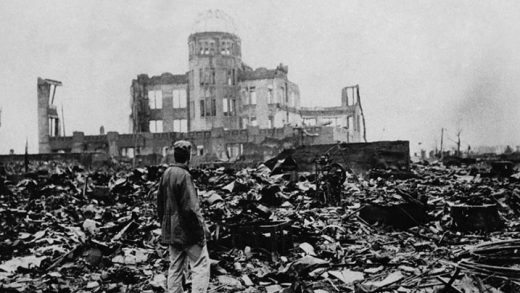
You certainly know about the sad history of Hiroshima during World War II but have you been to today’s beautiful Hiroshima? Let’s go!
Proclaimed as the city of peace in 1949 by the Japanese parliament, Hiroshima has reborn from its own ashes. Nowadays, it is a city where life is comfortable. There, you can go almost anywhere thanks to its buses and even tramways. Those two means of transports have each at least of starting point at the south exit of Hiroshima’s train station.
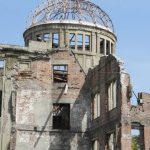
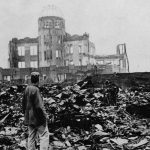
Le peace memorial park, located 25 minutes away from the station, becoming pastel pink colored in spring thanks to its many Japanese sakura trees. As well as strolling around in the park, you can find the remnants of the Genbaku dome, see the Hiroshima Memorial and even visit the museum of the peace memorial which entry is free. It is not exactly a happy stroll depending on your temperament but the scenery are very relaxing.
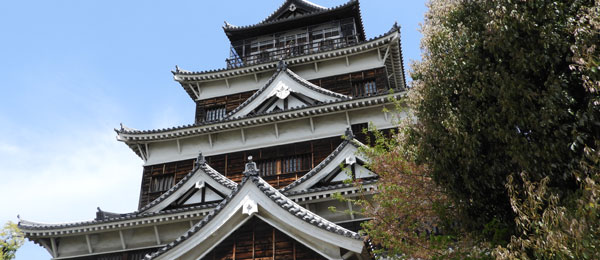
Not far from the park, to the north, is the Hiroshima castle, built around 1950. The city, built around the castle, was the economical center at the time. The city of Hiroshima, founded at the same time as its castle, got its name as it was built on the largest (hiro) island (shima) that form the river Ôta’s arms. The city served as a logistic base for the Japanese army during many wars but also served as the main location for the battle of Sekigahara in October 1900. This battle preceded the takeover of Tokugawa Ieyasu as shogun, a Japanese military ruler. Inside Hiroshima’s castle is a museum, which shows Hiroshima’s history before World War II.
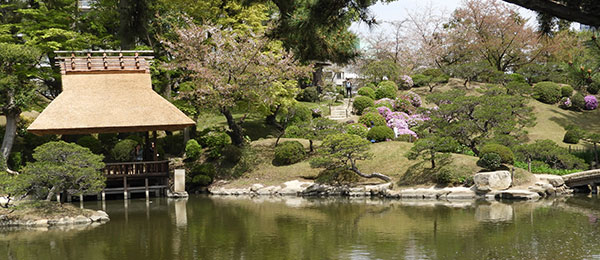
Going East from Hiroshima castle, you can take a wonderful stroll inside the beautiful Shukkei-en garden, built in 1620 at the request of the daimyo Asano Nagaakira, a governor of Hiroshima at that time. The Asano family lived inside the garden’s villa and even the Emperor Meiji stayed there for a short time during a trip to Hiroshima. During World War II, the park became a shelter for the victims of the nuclear bomb.
If you are feeling a bit hungry, you should try one of Hiroshima’s specialty, the okonomiyaki, at the Okonamiyaki-mura (lit. the village of Okonomiyaki)! Okonomiyaki’s is a type of savory pancake with its base made of cabbage on which are laid many ingredients. It may sound very simple but you will not be able to stop eating it as soon as you try one bite of it! Actually, the word okonomiyaki literally means “fried preference (or choice)” as it is generally made of whatever you like eating! (Almost anything is fine! For example, my family loves making them with salmon and chicken!)
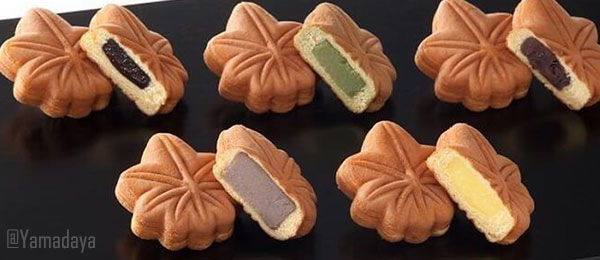
If you want to shop some more for gifts or yourself, you can always try Hondori (本通) mall, located east from the peace memorial park. There, you will find Nagasakiya, a shop installed since 1892 at Hiroshima and reconstructed after WWII. They sell the famous momiji manju, small cakes shapes like maple leaves stuffed with a sweet red bean paste.
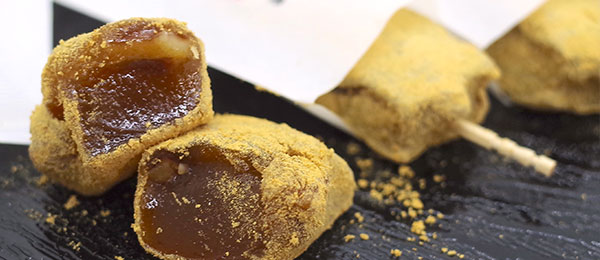
However, for a great collection of comestible (or not) souvenirs, you can always find a large choice of souvenirs in the many shops located directly inside Hiroshima’s train station. Even though momiji manju is the most popular souvenir of Hiroshima, if you like sweets, I suggest you try the kawadori mochi, a specialty made of rice, walnuts and powdered with kinako, a roasted sweet soy powder.
What to see or do in Hiroshima
Parks and Museums
– Hiroshima Orizuru Tower (panorama of the city)
– Le dôme de Genbaku
– Musée du Hiroshima Peace Memorial (free entrance)
– Shukkei-en (260 yen for adults, 100 yen for children)
– Château Hiroshima (370 yen for adults, free for children)
Okonomiyaki-mura
– Try one of Hiroshima’s specialties!
Nagasaki-ya
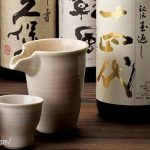
– You can find there many specialty of the region and even Japanese alcohol
ASSE Mall Center
– Buy some Kawadori mochi (川通り餅) at Kameya (亀屋)
– Or some Momiji manju (もみじ饅頭)
– Or any souvenir, sweet, that fancy you eye, there are so many of them!
Recent Comments