

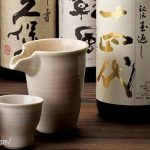



If you like alcohol and always wondered how it is made, here is for you an article about Japanese alcohol.
First, so that we don’t misunderstand the words that will be used here, what we call Sake, the rice wine, is actually called Nihonshu (日本酒) in Japan and Sake, in Japanese, just means alcohol. There are many types of sake (alcohol) in Japan, some of them are Nihonshu, Shochu, Umeshu and Awamori.
Japanese alcohols have a fermenting method that is started thanks to mushrooms spores called “Koji” and there are 3 different types of them:
– Black koji (or kuro-koji 黒麹菌)
It produce a large quantity of citric acid and is mainly used in Okinawa as it prevent formation of bacteria thanks to its resistance to warm temperatures. It gives a very rich aroma to its alcohols.
– White koji (or shiro-koji 白麹菌)
Easy to cultivate, it also produce a large quantity of citric acid. It quickly saccharize (produce sugar which help in alcohol making) and gives fresh and mellow aromas to its alcohols.
– Yellow koji (or ki-koji 黄麹菌)
It is very sensitive to temperatures. Its moromi (or brew) become astringent in warm regions. Yellow koji is mainly used in making Nihonshu.
Nihonshu is the most known alcohol of Japan. It is a rice wine which alcohol content is generally around 15° and 20°. There are 6 main categories to it:
– Junmai (純米)
It means “Pure rice”. The rice was polished to 70% (meaning that 30% of the rice was taken off). This type of alcohol is brew only with rice, water and yeast. It contains no additives.
– Honjozo (本醸造)
This types is also made with a rice polished to 70% but they added alcohol to the final product to mellow out the aromas of the Nihonshu.
– Ginjo and Junmai Ginjo (吟醸 and 純米吟醸)
This Nihonshu, also labeled “Premium”, has rice polished down to at least 60%. Brewed with a special yeast and particular fermenting technics, it had fruity and light flavours.
Junmai means that it has no additives and no added alcohol.
– Daiginjo and Junmai Daiginjo (大吟醸 and 純米大吟醸)
This is the best Nihonshu, the rice used to brew it was polished down to 50% (which means half of the rice is off!). Daiginjo is considered to be the pinnacle of a brewer’s work.
Junmai means that it has no additives and no added alcohol.
Shochu is brewed the same way as a whisky or a vodka. Its alcohol content is between 20° and 30° and it has three different varieties made with rice, barley or even sweet potato.
-Kome Shochu (or Honkaku Shochu, made of rice)
It is made with, almost, the same technics as the Nihonshu although it is much stronger than it.
– Mugi Shochu (barley)
It is mainly made with barley, the same way a whisky would be brewn, but does not ripen in barrels like its cousin, although some are indeed stored like whisky. The traditional Mugi shochu is easier to drink as Kome shochu while its ripen in cask version taste similar to whisky.
– Imo Shochu (sweet potato)
A first maceration is made by combining water, yeast and koji. Then, the sweet potato are steamed and mashed before being added to the first moromi (brew) and get a second maceration. The alcohol is then distilled. It is a strong alcohol but slightly sweet which make it easy to drink.
Umeshu is a liqueur made of ume (japanese plums) and sugar. Its three main ingredients are the Japanese plums, sugar and shochu, which are macerated for 6 months in a cold and dark place. Japanese plums (ume) are more acid than normal plums (normal plums have an acidity level around 1 to 2% while ume get to 4 to 5%)
Lastly, Awamori is an alcohol from the Okinawa islands and is made with long rice grains cultivated mainly in Thailand. The rice is polished then steamed almost the same way as if making Nihonshu but they use black koji for Awamori. After macerating the rice and the spores for 24 hours, water and yeast are added for a second maceration of 14 days in summer or 16 days in winter. Awamori is born after the brew is distilled. Its alcohol content is quite high (some get to 45°) and its flavors are fruity and round in mouth.
I hope this small article will be of help when you are trying to find an alcoholic souvenir from Japan when travelling there.
Have a fun tasting time and donc forget that alcohol abuse is dangerous for your health!
Small portions are good but not a full glass! (Be even more carefull with those presented in this article!)

Recent Comments